

Dentists Say Some Cavities Can Wait. Others Can Quickly Become Serious and Expensive

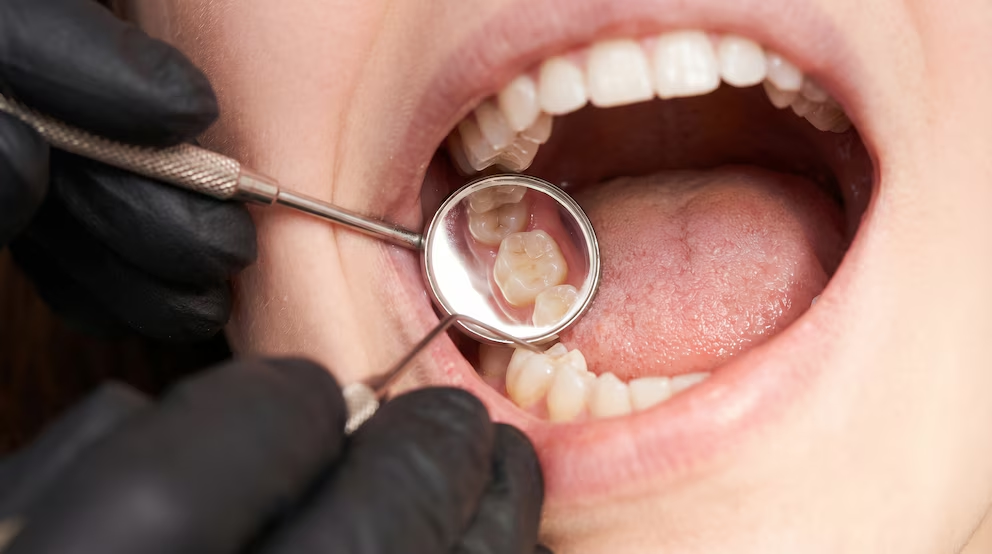
Most people do not feel a cavity forming.
By the time tooth pain appears, the damage may already be spreading beneath the enamel. That is one reason cavities remain one of the most common health problems in the United States, affecting millions of adults every year.
Now, a report highlighted by The Independent is raising an important question many patients hear at the dentist’s office:
Should you get a filling immediately, or is it safe to wait?
According to dental specialists interviewed in the report, the answer depends on how far the cavity has progressed and whether the damage has moved beyond the tooth’s outer enamel layer.
That decision can affect not only dental health, but also long-term costs, especially for working families already struggling with healthcare expenses.
Federal data from the National Center for Health Statistics shows that nearly 90% of Americans between ages 20 and 64 have had at least one cavity.
Why Some Cavities Do Not Need Immediate Fillings
Dentists say early-stage cavities can sometimes be managed without drilling if the decay has not yet penetrated the enamel.
In those cases, improving oral hygiene may slow or stop the damage.
That can include:
- brushing more effectively
- flossing daily
- reducing sugar intake
- using fluoride toothpaste
- scheduling regular dental checkups
Some dentists prefer monitoring small cavities before recommending treatment.
The goal is partly preventive. Every filling removes part of the natural tooth structure, and larger or repeated fillings can weaken teeth over time.
Experts from St. Louis Prosthodontics explained that older and larger fillings increase the risk of fractures, which can eventually require crowns or more extensive restoration procedures.
In simple terms, dentists try to avoid unnecessary drilling when possible.
But that does not mean cavities should be ignored.
Dental experts continue encouraging patients not to wait until severe pain develops before scheduling an exam.
The earlier a cavity is detected, the more treatment options usually exist.