

Lemon Water May Be Good for Your Routine. Your Teeth Are a Different Story.

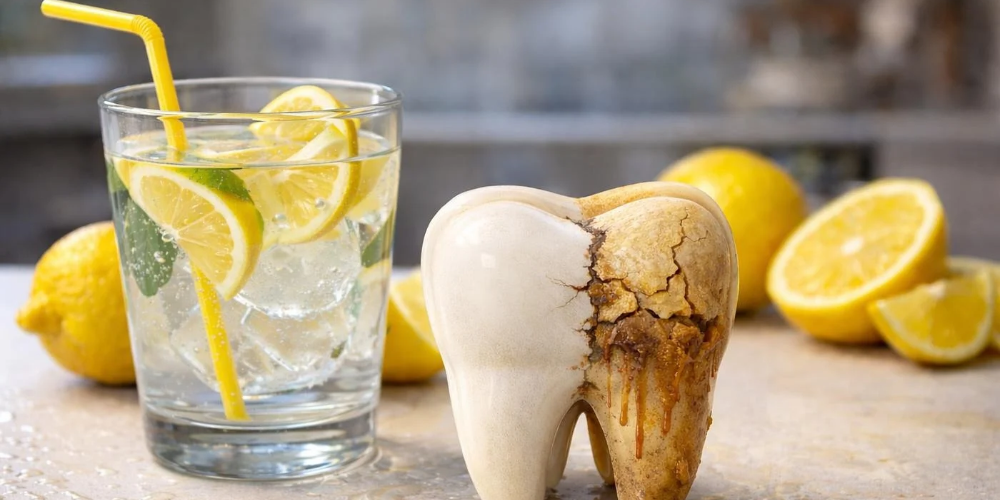
Summary: Lemon water is often promoted as a simple wellness habit, but dental research shows that repeated exposure to acidic drinks can contribute to enamel erosion. A study published in General Dentistry found lemon juice produced the most severe erosion among the citrus juices tested. That does not mean you need to give up lemon water. It means how often you drink it, how long it stays in contact with your teeth and what you do afterward matter.
For years, lemon water has been marketed as an easy health upgrade: squeeze lemon into a glass, drink it first thing in the morning and turn ordinary water into something that feels more purposeful.
But there is a part of that routine that deserves more attention.
Your teeth don’t care that the lemon is natural. They care that it is acidic.
Dental erosion is different from tooth decay. It is the chemical loss of tooth structure caused by acid rather than bacteria. The American Dental Association says frequent exposure to acidic foods and beverages can increase the risk of erosive tooth wear, and fruit juices are among the dietary sources that can contribute to that exposure.
Lemon juice showed particularly strong erosive effects
One study frequently cited in discussions about citrus and tooth erosion examined human permanent teeth exposed to orange, lemon and grapefruit juices over 20 weeks.
The results were striking.
Researchers found that lemon juice produced the most severe damage among the citrus juices tested. The effects included loss of cusp height and enamel, with continued exposure producing progressively greater enamel loss.
That finding does not mean drinking one glass of lemon water will suddenly damage your teeth.
The important issue is repeated exposure.
Enamel is the hard outer layer protecting your teeth, and unlike other tissues in the body, lost enamel does not simply grow back. Dental erosion can progress over time and, when severe, contribute to sensitivity and exposure of the underlying dentin.
The real problem may be the habit, not the lemon
A person who occasionally eats lemon with a meal is in a different situation from someone who carries a bottle of lemon water around all day, taking small sips every few minutes.
The American Dental Association notes that frequency, consumption patterns and the amount of time acids remain in contact with teeth all influence erosive tooth wear.
That makes the common wellness habit of continuously sipping acidic water worth reconsidering.
The longer and more frequently teeth are exposed to acid, the more opportunities there are for erosion to occur.
Saliva helps. It naturally buffers acids and helps restore the mouth’s environment after an acidic exposure. But saliva does not make repeated acid exposure harmless.
So should you stop drinking lemon water?
Not necessarily.
The evidence supports a more practical approach: reduce the acid’s contact with your teeth rather than treating lemon water as something inherently dangerous.
If you enjoy lemon water, several simple changes can reduce exposure.
Drink it rather than slowly nursing it all day. A concentrated period of exposure is preferable to repeatedly bathing the teeth in acid.
Use a straw. The ADA recommends positioning a straw so the drink has less contact with the teeth.
Don’t swish it around your mouth. Holding or moving an acidic drink around the teeth increases contact.
Rinse with plain water afterward. Water helps wash away acids and allows saliva to do its job.
Consider having it with a meal. The broader dental guidance around acidic foods and beverages favors reducing isolated exposures, and saliva production during eating can help buffer acids.
Don’t brush immediately after
This is one of the most important practical points.
After an acidic exposure, the tooth surface can be temporarily more vulnerable. The ADA recommends rinsing with water rather than brushing immediately after consuming acidic foods or beverages.
The exact waiting recommendation varies in dental guidance. The important point is not to reach for your toothbrush immediately after an acidic drink.
Instead, rinse with water and give your mouth time to recover.
The bigger lesson behind lemon water
Lemon itself isn’t the villain.
The problem is the assumption that natural automatically means harmless to teeth.
Dental erosion is driven by chemistry, not whether a food or drink is marketed as healthy. The ADA identifies acidic beverages and fruit juices as potential contributors to erosive tooth wear, particularly when exposure is frequent.
So if lemon water is part of your morning routine, there is no reason to panic over a glass.
But if that glass becomes a bottle that you sip continuously throughout the day, the evidence suggests your teeth may be paying a price for the wellness habit.
The better rule is simple: keep the lemon if you like it, but give your teeth a break from the acid.
If you regularly experience tooth sensitivity, visible enamel changes or pain when consuming hot, cold or acidic foods, talk with a dentist. Early erosion can be difficult to recognize without a dental examination.