

How Often Should You Replace Your Toothbrush? The 3-Month Rule Isn’t the Whole Story

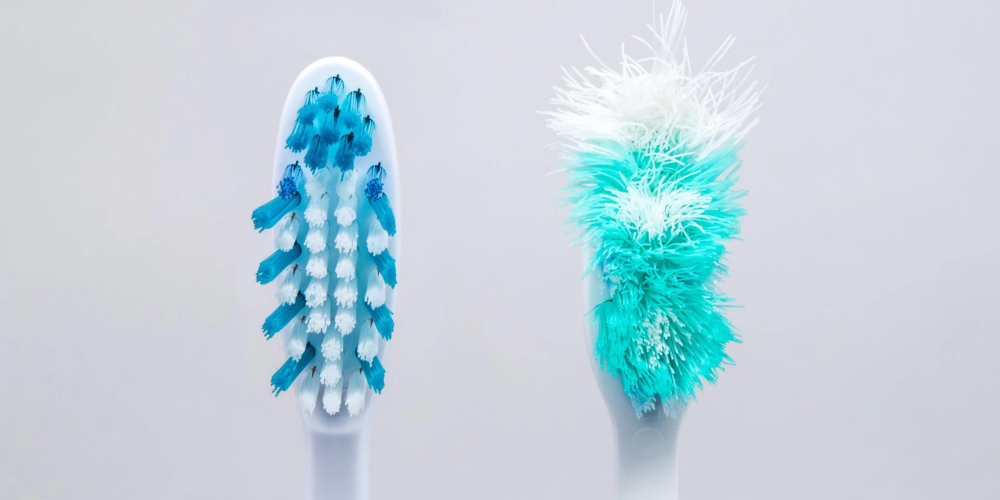
The American Dental Association recommends replacing your toothbrush every three to four months—but worn bristles may be an even better warning that it’s time for a new one.
When was the last time you replaced your toothbrush?
If your answer is “about three months ago,” that’s a good reminder. But the calendar isn’t the only thing dentists want you to watch.
The American Dental Association’s guidance on toothbrushes recommends replacing a toothbrush approximately every three to four months, or sooner if the bristles become matted or frayed. The ADA says a brush becomes less effective as its bristles wear.
That means your toothbrush can give you an important clue: look at the bristles.
The bristles may tell you it’s time
A toothbrush doesn’t suddenly stop working when it reaches its third month.
Wear varies from person to person. Someone who brushes gently may have a relatively intact brush after three months, while someone who uses heavy pressure may damage the bristles much sooner.
Research supports paying attention to that difference.
A study published in Clinical Oral Investigations found that toothbrushes with extreme bristle wear were less effective at removing plaque than brushes with little or no visible wear. The researchers concluded that bristle splaying may be a better indicator of replacement time than the age of the toothbrush alone.
So, take a look at your brush.
Replace it if the bristles are:
- Splayed outward
- Flattened or bent
- Frayed or matted
- Visibly worn
- Showing obvious damage from chewing or heavy brushing
If you see those signs, you don’t need to wait for the three-month mark.
What about electric toothbrushes?
The same basic principle applies to electric toothbrush heads.
The ADA’s recommendation covers toothbrushes generally: replace them around every three to four months, or sooner when the bristles become worn.
Electric toothbrush heads can look different from conventional brushes, but the important question remains the same:
Are the bristles still in good condition?
Don’t rely solely on a reminder built into the package or app. Look at the head itself.
Brushing too hard can wear your brush—and your gums
If your bristles become flattened or splayed unusually quickly, your brushing technique may be part of the problem.
More pressure isn’t necessarily better cleaning.
Aggressive brushing can accelerate bristle wear and may irritate or damage gum tissue. A toothbrush should do the cleaning without requiring you to scrub your teeth forcefully.
The goal is thorough, gentle brushing, not making the bristles look like they’ve been through a workout.
What parents should know about children’s toothbrushes
Children can be especially hard on toothbrushes.
They may chew the bristles, bite the brush or use more pressure than necessary. That means parents should inspect children’s toothbrushes regularly rather than assuming every brush will last exactly three months.
If a child’s bristles become visibly frayed, flattened or splayed, replace the brush.
And because children are still developing their brushing habits, replacing a worn brush is only part of the equation. Parents should also help children maintain consistent brushing and use age-appropriate oral-care products.
Do you need a new toothbrush after being sick?
This is one area where popular advice can get ahead of the evidence.
You may have heard that you should automatically throw away your toothbrush after every cold or flu to prevent reinfection.
That’s not a universal recommendation from the ADA.
The ADA recommends rinsing a toothbrush thoroughly after use and storing it upright in an open area where it can air-dry. It also notes that there is no evidence that the bacteria that can be found on toothbrushes cause adverse health effects in normal use.
So after an ordinary illness, focus first on proper toothbrush care rather than assuming a new brush is medically required.
People with specific health conditions or concerns should ask their dentist or physician whether replacing the brush after an illness makes sense for them.
Don’t trap a wet toothbrush in a closed container
Your toothbrush needs to dry.
The ADA recommends storing it upright and in the open rather than routinely placing a wet toothbrush in a closed container.
A travel case can protect a toothbrush when you’re transporting it, but sealing a wet brush inside a closed case for long periods prevents it from drying properly.
At home, give your toothbrush space and airflow.
And never share a toothbrush
This one is simple: don’t share toothbrushes.
Toothbrushes can exchange saliva and microorganisms between people. Every member of a household should have their own toothbrush.
That includes children.
The three-to-four-month recommendation is a useful rule of thumb—but don’t treat it like an expiration date.
Your toothbrush’s condition matters.
If the bristles are still relatively straight and intact, the brush may not look dramatically different at three months. If they’re already splayed, flattened or frayed, it’s time for a replacement.
The best routine is simple:
Brush regularly. Use gentle pressure. Rinse your toothbrush after use. Let it air-dry. Don’t share it. And replace it about every three to four months—or sooner when the bristles show significant wear.
Your toothbrush may not come with an expiration date.
Your bristles are the warning label.
This article is for general educational purposes and does not replace advice from your dentist or other qualified oral-health professional.