

Can What You Eat Really Affect Your Mental Health? Scientists Are Finding Out

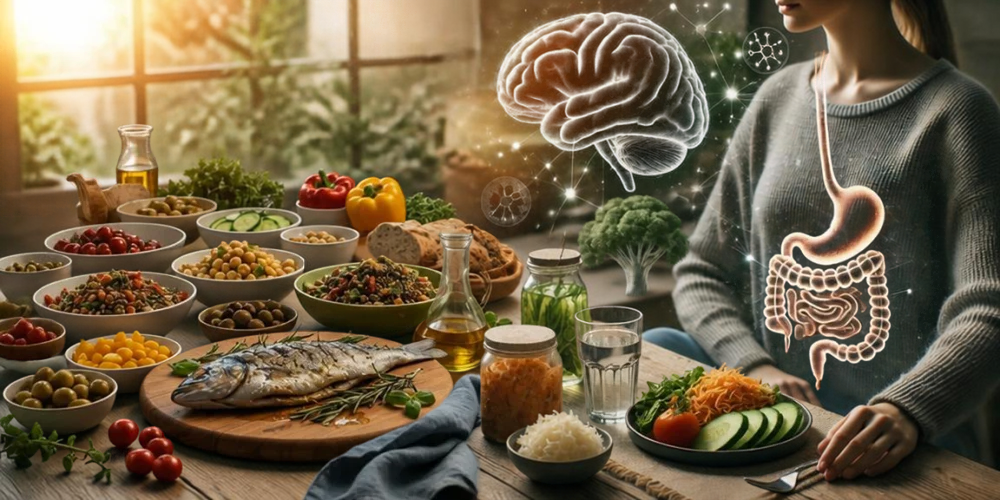
We usually think about food in terms of weight, heart health, blood sugar or energy.
But researchers are increasingly asking another question: Could what we eat also affect how we feel?
The answer appears to be yes, although the science is more complicated than “eat healthy food and you won’t be depressed.”
A growing field called nutritional psychiatry is examining the relationship between diet, the brain and mental health. Research now includes population studies, clinical trials and reviews of multiple studies. The evidence suggests that diet may play a role in depression and psychological well-being, but it does not show that food can replace therapy, medication or other mental-health treatment.
Some of the earliest evidence came from studies showing that people who followed healthier dietary patterns tended to report better mental health.
Mediterranean-style diets, generally built around vegetables, fruits, beans, whole grains, nuts, fish and other minimally processed foods, have been associated with a lower risk of depression in observational research. One meta-analysis found an inverse association between adherence to a Mediterranean diet and depression, although observational studies cannot prove that diet itself caused the difference.
Researchers have also gone further by testing dietary changes in clinical trials.
One of the best-known examples is the 2017 SMILES trial. In the randomized trial, adults with moderate to severe depression received either nutritional counseling or a social-support intervention for 12 weeks. The group receiving dietary support had greater improvement in depression symptoms and a higher remission rate.
That is important because it moves the question from “Do healthy people tend to eat better?” to “Can changing someone’s diet actually change depression symptoms?”
But one trial does not settle the question.
A 2025 systematic review and meta-analysis of five randomized controlled trials involving 1,507 people found that Mediterranean-diet interventions reduced depressive symptoms. The researchers also rated the certainty of the evidence as low and called for larger, longer and higher-quality trials.
So why might food affect the brain?
One area researchers are studying is the gut-brain connection.
The gut and brain communicate in both directions through several pathways, including the nervous system, immune system, hormones and the vagus nerve. The trillions of microorganisms living in the gut can also produce substances that interact with these systems.
That does not mean, as some wellness claims suggest, that eating a certain food simply “boosts serotonin” in the brain.
The biology is much more complicated.
Researchers are investigating whether diet influences the gut microbiome, inflammation, metabolism and other processes that can in turn affect brain function and mood. Much of this science is still developing.
The strongest message emerging from the research is not that one food, vitamin or supplement is a magic answer.
It is about dietary patterns.
Diets built around more fruits, vegetables, whole foods, healthy fats and minimally processed foods are generally associated with better mental-health outcomes. At the same time, diets high in ultra-processed foods have increasingly been linked with poorer mental-health outcomes.
That does not mean every packaged food is harmful or that someone needs to completely change the way they eat.
It also does not mean a particular diet will work the same way for everyone.
In fact, recent research examining plant- and meat-predominant dietary patterns found conflicting results and highlighted the limitations of relying heavily on observational studies.
This may be the most important part of the story.
The evidence does not show that:
- depression is simply caused by poor eating;
- a Mediterranean diet cures depression;
- probiotics or supplements can replace psychiatric treatment;
- one nutrient can prevent mental illness;
- everyone will experience the same benefit from changing their diet.
There is another complication: mental health can affect eating habits, too.
Depression, anxiety and chronic stress can make it harder to shop, cook, eat regularly or choose healthier foods. Someone struggling with depression may have little energy or motivation to prepare a meal.
So the relationship between food and mental health can work in both directions.
What should readers take from this?
You do not need to think of food as a cure for mental illness.
A better way to understand the research is that nutrition may be one part of a much larger picture of brain and mental health.
Eating more fruits, vegetables, beans, whole grains, nuts and other minimally processed foods can support overall health, while dietary changes may also become an increasingly useful part of mental-health care.
But if someone is experiencing depression or another serious mental-health condition, changing their diet should not mean stopping treatment.
The science is promising. It is also still evolving.
And that distinction is key: food may be part of the solution, but researchers have not found a plate of food that replaces mental-health care.