

Could Gum Disease Affect the Heart? New Research Points to a Possible Link

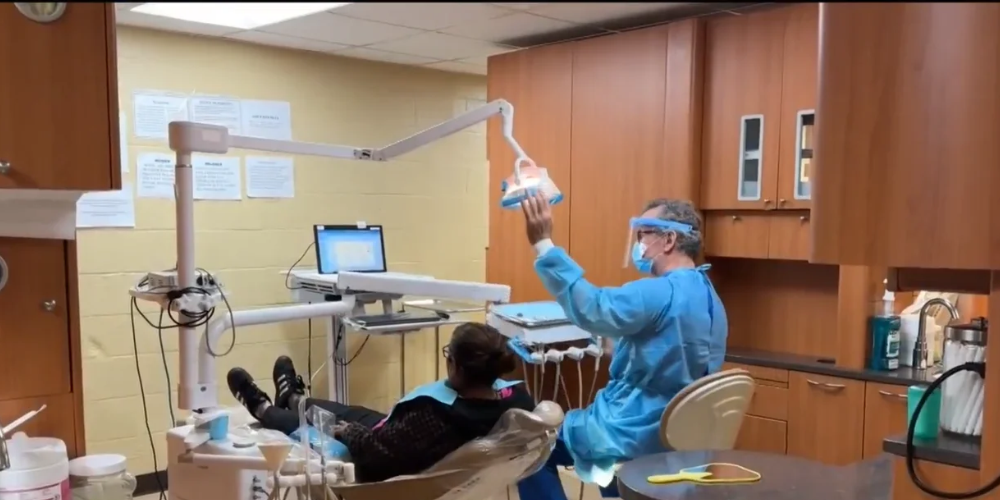
A new study is raising an intriguing question about oral and heart health: Could bacteria associated with gum disease help drive calcium buildup in the heart’s aortic valve?
Researchers found evidence suggesting a possible connection between the gum-disease bacterium Porphyromonas gingivalis, inflammation and calcific aortic valve stenosis, a condition in which the aortic valve becomes thickened and hardened.
But there is an important limitation: the research is preliminary and does not yet prove that gum disease causes heart-valve disease in people.
What researchers found
The study focused on P. gingivalis, a bacterium strongly associated with periodontal disease.
Researchers examined human heart-valve tissue removed during valve-replacement surgery. They found higher levels of P. gingivalis in calcified aortic valves than in valves affected by other diseases.
They then studied the bacterium in mice.
Repeated exposure to live P. gingivalis was associated with the accumulation of bacteria in the animals’ aortic valves, increased valve calcification and signs of aortic stenosis. The researchers also identified activation of interleukin-1 beta (IL-1β), an inflammatory pathway.
When researchers blocked that pathway or used preventive antibiotics in the mice, the amount of calcification and valve-related changes were reduced.
Those findings suggest a possible pathway:
gum-disease bacteria – inflammation – valve calcification
But that pathway still needs to be demonstrated in humans.
What is calcific aortic valve stenosis?
The aortic valve controls blood flow from the heart to the rest of the body.
With calcific aortic valve stenosis, calcium deposits accumulate on the valve, causing it to become stiff and narrow. The heart then has to work harder to push blood through the opening.
Early disease may cause no symptoms. As it becomes more severe, people can develop:
- Shortness of breath
- Chest pain
- Fatigue
- Fainting
- Heart failure
Severe aortic valve stenosis is generally treated with valve replacement. The American Heart Association notes that there are currently no medications proven to prevent or slow the progression of calcific aortic valve stenosis.
That is one reason researchers are interested in finding potentially modifiable factors that might contribute to the disease.
Why gum disease is being investigated
Periodontal disease is an inflammatory infection of the tissues supporting the teeth.
P. gingivalis is one of the bacteria associated with periodontitis and has previously been studied in connection with inflammation and cardiovascular disease.
Earlier laboratory research has also found that P. gingivalis can promote processes associated with vascular calcification in experimental models. Those studies provide biological context for the new research, but they do not establish that periodontal disease causes aortic valve stenosis in humans.
The new study takes the question a step further by examining calcified heart valves specifically.
This does not prove that gum disease causes heart-valve disease
This is the most important point for readers.
The research presented in 2026 was a scientific-meeting abstract, not a completed peer-reviewed journal article. The American Heart Association says the findings are preliminary and have not yet been confirmed in people. Researchers have begun a clinical study to investigate the potential connection further.
So the evidence currently supports three different statements:
What researchers observed:
P. gingivalis was found in human calcified aortic-valve tissue, and experiments in mice linked exposure to the bacterium with inflammation and increased valve calcification.
What researchers are investigating:
Whether periodontal bacteria actually contribute to the development or progression of calcific aortic valve stenosis in humans.
What the study cannot yet tell us:
Whether treating gum disease will prevent aortic valve disease, slow its progression or reduce the need for valve replacement.
That distinction matters.
What should you do about your gums?
The new findings do not mean people should take antibiotics to prevent heart-valve disease.
The researchers themselves say it is too early to recommend specific treatments for preventing calcific aortic valve stenosis based on these findings.
But taking care of your oral health remains important regardless of how this research develops.
Good everyday practices include:
- Brush regularly with fluoride toothpaste.
- Clean between your teeth.
- Have regular dental examinations.
- Pay attention to persistent bleeding or swollen gums.
- Seek dental care if you have signs of periodontal disease.
The potential heart connection is an additional reason researchers are interested in periodontal health—not a reason to replace established dental care with unproven treatments.
What happens next?
The next important step is human research.
Scientists need to determine whether the bacteria found in calcified valves are actually contributing to the disease or are simply present alongside other processes that cause valve calcification.
They also need to determine whether treating periodontal disease changes the risk or progression of aortic valve disease.
Until those questions are answered, the findings should be viewed as an important research lead, not a new diagnosis or treatment recommendation.
New research suggests that bacteria associated with gum disease may play a role in inflammation and calcium buildup in the heart’s aortic valve.
The findings are biologically interesting because researchers observed the bacterium in human calcified valve tissue and reproduced related effects in mice.
But the study has not established that gum disease causes aortic valve disease in people, and it does not show that treating gum disease can prevent it.
For now, the practical message is straightforward: take care of your oral health, but don’t confuse promising research with proven treatment.
The next round of human studies will help determine whether the connection is causal—or simply another piece of a much more complicated heart-disease puzzle.