

Clinica Romero Sponsors Legislation that Creates a Pathway for Salvadorean Physicians

FOR IMMEDIATE RELEASE
April 16, 2026
Media Inquiries:
Veronica Alvarado
Director of Communications
Clínica Monseñor Oscar A. Romero
(626) 476-6181
valvarado@clinicaromero.com
Clínica Romero & Senator Caroline Menjivar (D–San Fernando Valley) Leads Effort to Advance SB 1179 Expanding Access to Care in Underserved Communities
Clinica Romero Sponsors Legislation to Decrease Doctor Shortage in California. SB 1179 passed its first Senate Committee by 10-0 votes. The bill creates a pathway for Salvadorean physicians to help California with the shortage of bilingual-culturally sensitive providers.
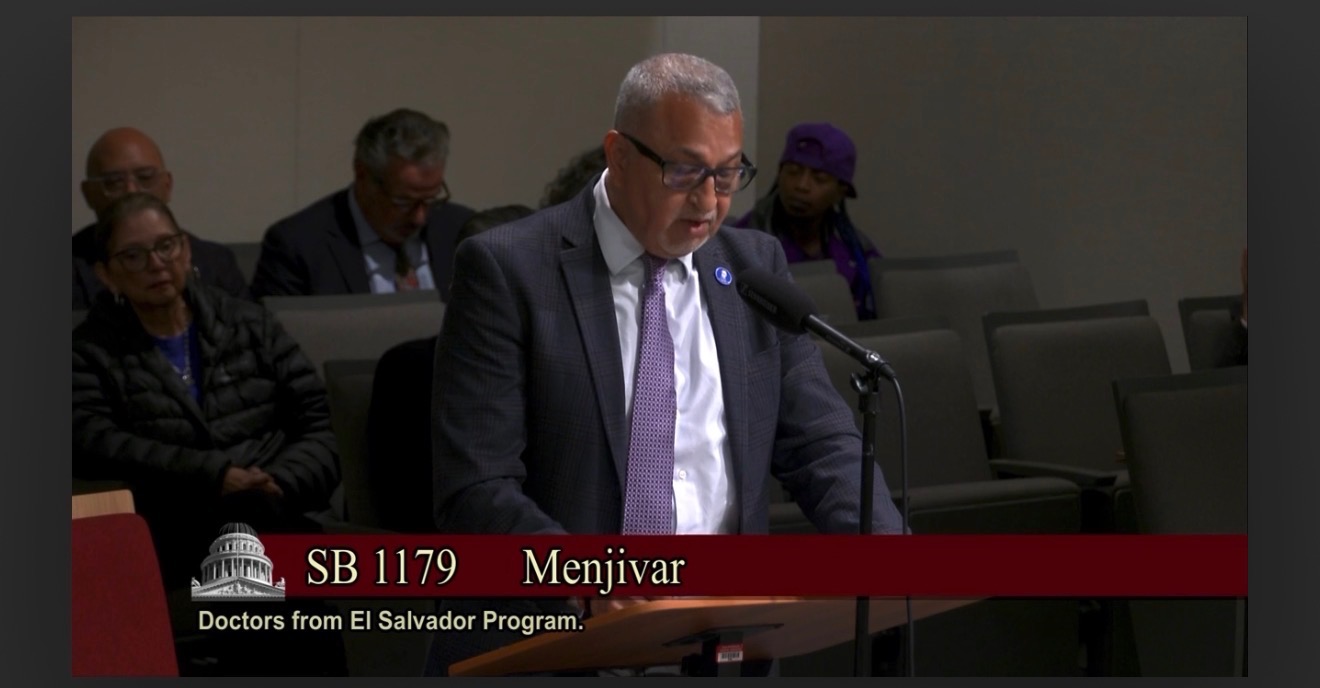
Los Angeles, CA — Clínica Monseñor Oscar A. Romero is leading the advancement of Senate Bill 1179 (SB 1179), authored and championed by Senator Caroline Menjivar (D-20). The legislative proposal was heard in its first committee, the Senate Business, Professions, and Economic Development Committee chaired by Senator Wahab (D-10) on Monday, April 13, 2026. It passed unanimously with bipartisan support, reaching a vote count of 10-0.
The legislation would establish a structured pathway for licensed physicians from El Salvador to serve in Federally Qualified Health Centers (FQHCs), expanding access to care in medically underserved communities across California.
During the hearing, the witnesses highlighted both the scale of California’s physician shortage and the need for practical, near-term solutions that can be implemented within existing healthcare systems. Consistent data shows a growing shortage of healthcare professionals to serve the 40 million people that live in California.
Additionally, more than 7 million Californians live in federally designated Health Professional Shortage Areas in which community health centers serve as a primary source of care in those regions for millions of patients statewide. Despite representing nearly 40 percent of the population, Latinos account for only 6 to 7 percent of practicing physicians. Language barriers and culturally sensitive care can be barriers to healthcare justice impacting hospital emergency rooms. Community clinics are a life source to patients and preventative care. California is home to the largest Salvadorean community outside of El Salvador and has a growing mutually beneficial exchange of ideas. Given the healthcare realities California is facing, the legislature has an opportunity to increase doctor shortages and access to care.
“For two years, I’ve been working on an issue that is looking to close the gap in the lack of bilingual physicians in California. As of right now, we have approximately 29% in California that only turn to Spanish as their number one language, and they are experiencing barriers in accessing their necessary healthcare. By building on this existing Mexico Physicians program for physicians from El Salvador, we will expand our workforce capacity, ultimately increasing access for patients.” said Senator Caroline Menjivar (D–San Fernando Valley)
Dr. Julio Meza, physician at Clínica Romero and UCLA, shared: “I was trained as a physician at Universidad Evangélica de El Salvador and later graduated from UCLA. I came to California ready to serve, but for seven years, I wasn’t allowed to practice, while patients in my own community struggled to find care in their language and with someone they trust. During that time, I worked in healthcare, watching patients I was trained to treat go without the care they needed. Today, I serve at UCLA and Clínica Romero, working alongside physicians trained at places like Yale and Johns Hopkins. For years, this has meant patients going without care, even when physicians were ready and qualified to treat them. SB 1179 makes it possible for physicians like me to serve our communities when we are needed, not years later.”
“SB 1179 ensures our communities have access to culturally and linguistically competent Spanish-speaking physicians, a gap that has gone unaddressed for too long. For years Clínica Romero has long cultivated a relationship with El Salvador to lay the foundation of this bill, working with medical schools and other institutions. These doctors will serve a broad, diverse population, expanding access to care for anyone who needs culturally and linguistically competent care. Senator Menjivar’s leadership and commitment to SB 1179 is exactly the kind of urgency this moment calls for, and a responsibility Clínica Romero carries to bring a concrete solution .” — Carlos Vaquerano, President & CEO, Clínica Romero
SB 1179 sponsored by Clinica Romero, and co-sponsored by the California Primary Care Association Advocates, (CPCA), supported by a coalition of more than 80 organizations, including elected offices, community health centers, physician associations, labor, education, and community-based institutions across the state, reflecting broad alignment on the need to expand access to care. In addition, the California Latino Legislative Caucus has made SB 1179 a priority expanding access to culturally competent care, lending further momentum to unanimous passage out of the committee.
Clínica Romero will continue to work with Senator Menjivar, legislative partners and stakeholders to advance the bill through the legislative process. The CEO of Clínica Romero is available for interviews upon request.
###
MEDIA CLIPS:
For clips from Senator Menjivar, Dr. Julio Meza or Carlos Vaquerano, President & CEO of Clinica Romero, please go to: YOUTUBE LINK
About
Clínica Monseñor Oscar A. Romero is a Federally Qualified Health Center serving communities across Los Angeles with comprehensive primary care, behavioral health, and supportive services. The organization is committed to advancing healthcare and improving access to care for underserved populations.